English
ECEs
as Professionals

What does it mean to be a professional in early childhood education?
ECE practitioners are passionate and creative professionals in the field of early childhood education and human development. Reflective practice and ongoing learning are cornerstones of ECE professional development, and there are many career pathways through early childhood education as a field. ECEs support each others’ career development through peer mentorship and communities of practice.
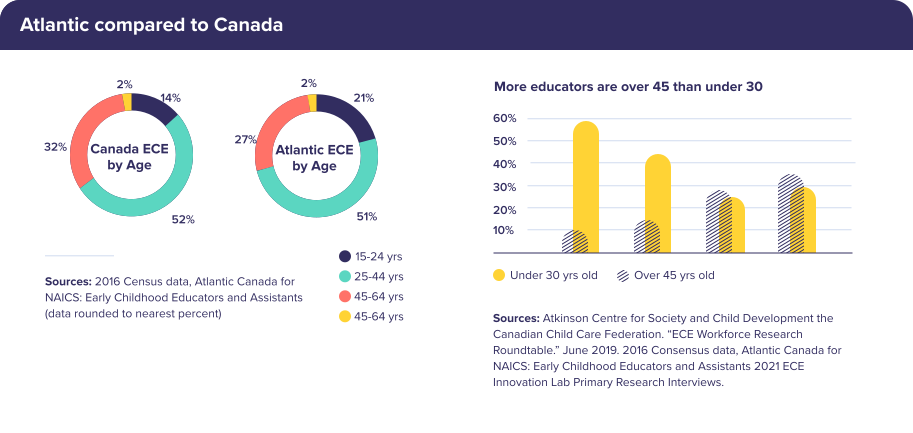
In Atlantic Canada, just under 10,000 early childhood educators provide care and learning services for more than 60,000 children. The vast majority of ECE professions in Canada are women, and the same is true in Atlantic Canada. A decade ago fewer ECEs working in Atlantic Canada had newcomer backgrounds, and on the whole the Atlantic provinces had less racial and cultural diversity represented among the ECE workforce compared to the national average. However, these trends are changing as overall regional demographics shift and the ECE workforce adapts and grows.


Systemic challenges, resourceful ECEs

Despite the meaningful work of ECEs, the sector faces some challenges. Research conducted as part of the ECE Lab revealed four key systemic challenges that impact ECEs’ work:
- An overall aging workforce,
- more diverse needs for care and learning often without adequate specialist support,
- a history of low wages and limited benefits, and
- high occupational risk for burnout.
ECEs from across Atlantic Canada shared the challenges they face in their own words.

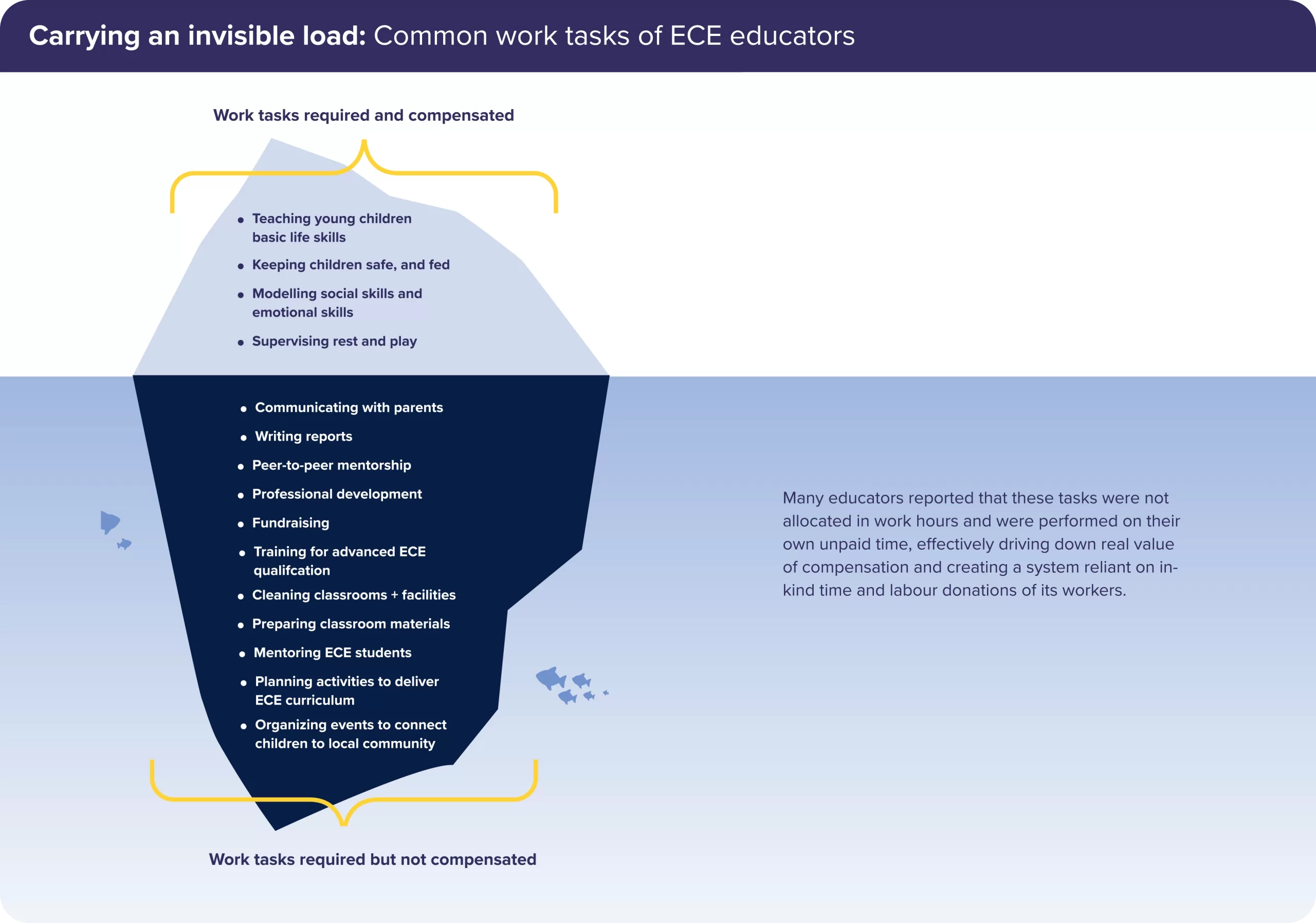
Public perception of ECE work doesn’t always align with the high level of professionalism practiced in the sector, and this can lead to ECEs not being properly recognized for their contributions to society. The ECE sector is addressing this through better-defined career pathways, expanded credentialing options, increased wages, professional learning programs, and public relations campaigns.
Some of these solutions were prototyped in the ECE Lab. You can learn more about them on the ECEs as Innovators page.
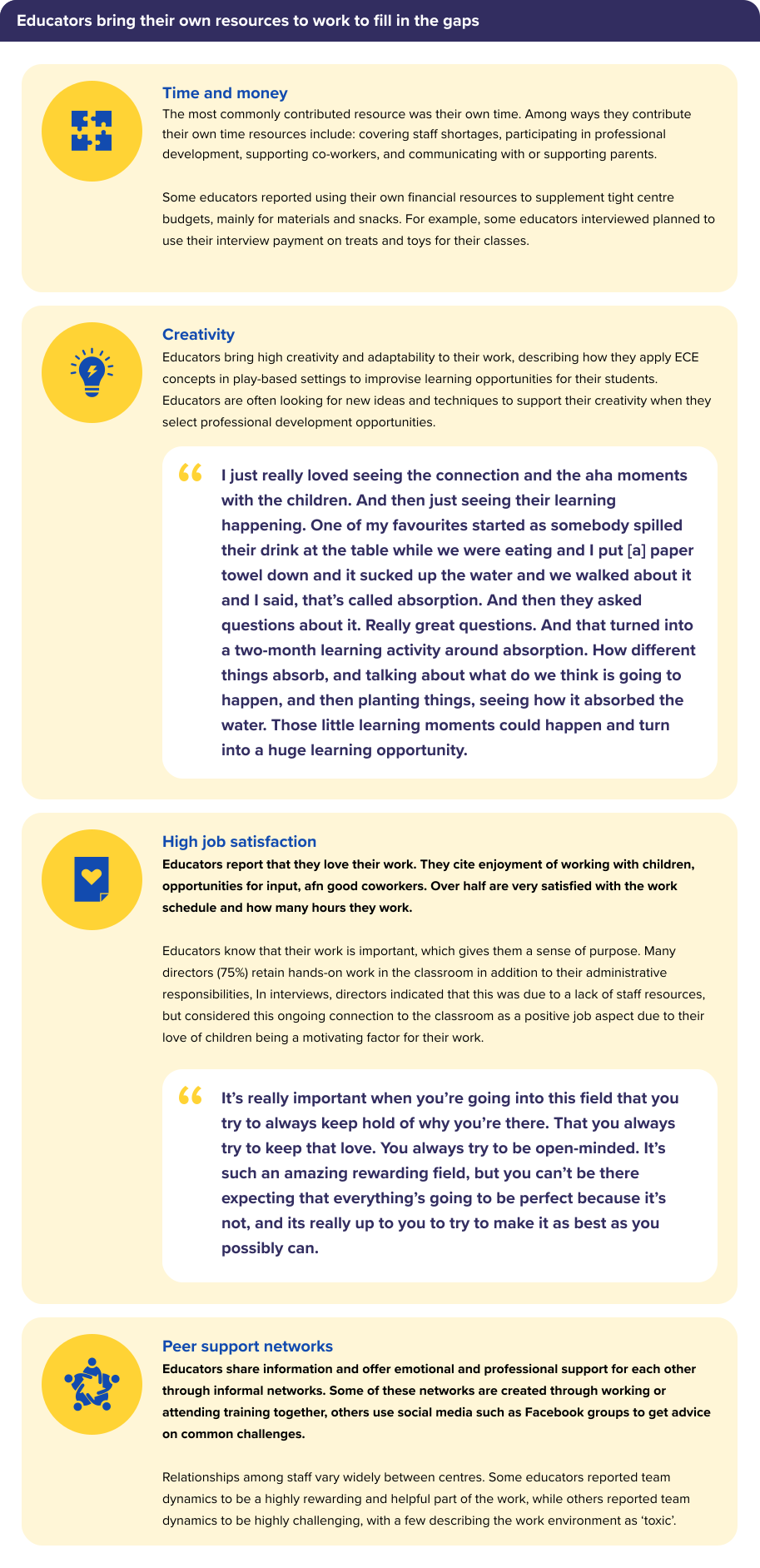
The lab also shone light on the creative and resilient ways that ECEs bring resources to bear on these challenges, and how they strive to deliver high-quality early learning and care.