
UNB’s Centre for Nuclear Energy Research (CNER) Launches New R&D Projects in the Advanced Nuclear Reactors Laboratory
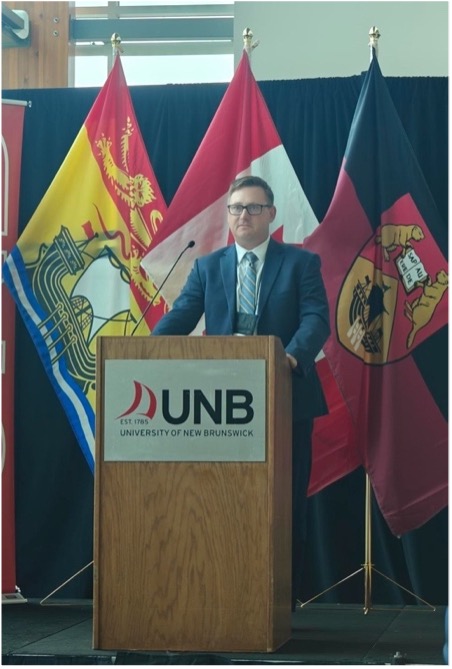
Figure 1. Dr. Cook at ANRL
Grand Opening in July 2026.
This blog was contributed by Dr. William Cook
Professor, Department of Chemical Engineering
Director, Centre for Nuclear Energy Research
University of New Brunswick
Last July, the Centre for Nuclear Energy Research (CNER) at the University of New Brunswick officially opened the Advanced Nuclear Reactors Laboratory (ANRL). This state-of-the-art facility represents an expansion of laboratories that CNER has been building and operating over the past 35 years to support the nuclear industry in Canada and abroad. Founded in 1991, CNER specializes in operational chemistry and material performance for the current generation of nuclear reactor systems and operates numerous high-temperature, high-pressure test systems that simulate the conditions in nuclear reactors environments.
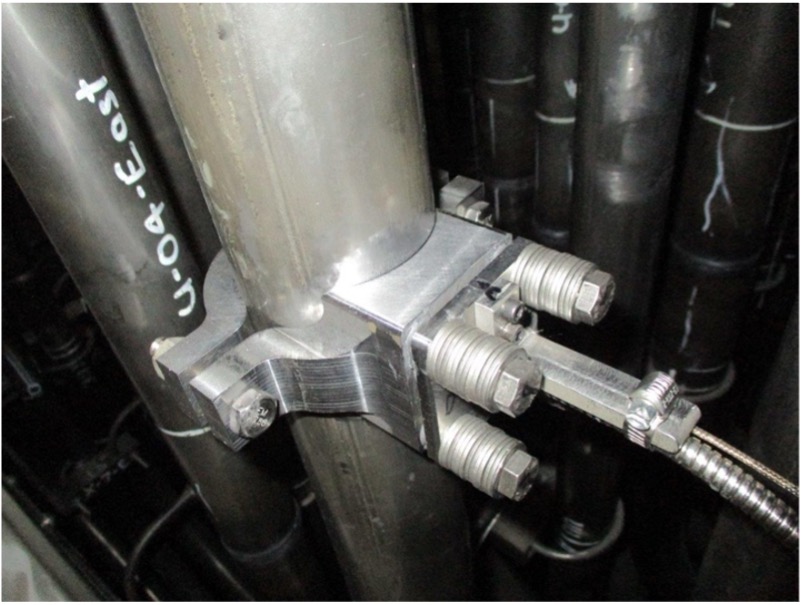
Figure 2. Photo of HEPro corrosion monitoring sensor connected to an outlet feeder pipe at a CANDU nuclear power station.
CNER has successfully designed, deployed and maintained the HEPro corrosion monitoring sensor that is progressing to full commercial deployment in partnership with the Canadian Nuclear Laboratories (CNL). First installed at the Point Lepreau Nuclear Generating Station (PLNGS) in 2006, the HEPro technology has proven to be a valuable tool for monitoring the corrosion, chemistry and system health of CANDU stations for 20 years. Recent installations at Darlington and Bruce Power for monitoring the hot conditioning process during plant first start-up following refurbishment has further demonstrated the technology’s capabilities and has saved the utilities millions of dollars on critical path time to plant start-up.
The ANRL facility at CNER further expands our capabilities to support advanced nuclear reactor systems that may be deployed in New Brunswick, Canada or globally. Starting as many as eight years ago, CNER has worked with advanced reactor vendors to identify key issues and experimental work required to support planned construction and operation of these reactor systems. During that time, the concept for the advanced nuclear reactors lab was visualized.
The coolants used for advanced nuclear reactor systems, such as molten salt and liquid metals, react with moisture and oxygen in the environment so specialized facilities are required for their handling and appropriate experimentation. The ANRL was designed specifically for the purpose of maintaining these materials in inert environments for safe handling and experimental purposes.
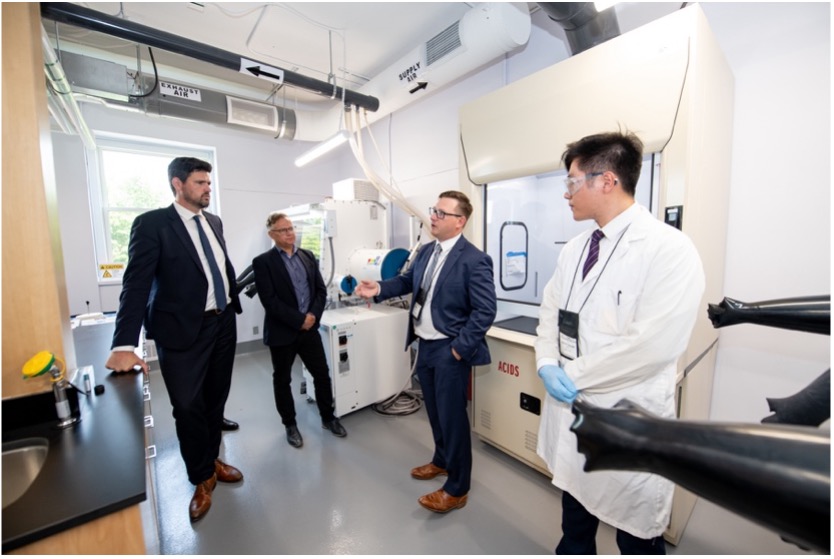
Figure 3. Touring the ANRL during the Grand Opening in July 2026.
Examples of the work now able to be conducted at the ANRL include precise analysis of the thermophysical properties of various molten salt mixtures, along with studying the impacts that impurities in these salt systems may have on the materials used to construct the reactor systems. Additionally, expanded capacity at the ANRL for work with the current generation of water-based reactors, such as CANDU, PWRs, BWRs, and the GenIII+ small modular reactors (SMRs) being deployed in Ontario, has given CNER enhanced capabilities to support all potential reactor systems that will be deployed in the coming decade.
As New Brunswick and Atlantic Canada aim to tackle nation building projects, energy is at the top of most minds. The Eastern Energy Partnership aims to generate Giga-Watts of electricity to be used locally and to send to various parts of Canada and down to the United States. The growth of AI data centres and the eventual expansion of electric vehicle use, combined with the retirement of several large electrical generating assets in New Brunswick and a growing population means that significant new generation capacity will absolutely need to be deployed in the coming decade. Nuclear power is poised to be the cornerstone for non-emitting base-load electricity production to meet this rising demand growth. With the scaling capacity that combinations of large reactors and SMRs together bring, nuclear power can provide the non-emitting base-load electricity production required while easily offsetting and backing the variable capacity of renewable energy generation. The time is right for a significant expansion of nuclear generation capacity and New Brunswick is in the right place, at the right time to make this happen.
On May 5, 2026, ResearchNB and the Fredericton Chamber of Commerce partnered with the Pond-Deshpande Centre to convene researchers at the forefront of clean energy innovation in New Brunswick. The panel at Planet Hatch spotlighted work in solar materials, nuclear systems safety, and smart building technologies — a reminder that Atlantic Canada’s energy transition is already underway, driven by researchers working right here in the region. Dr. Cook was a panelist, and this research summary is one example of the thinking shaping that conversation. Follow the Pond-Deshpande Centre’s newsletter to stay connected to the ideas and people driving New Brunswick’s energy future.
