 English
ECEs as Innovators

“Let’s try it out!”
Social Innovation in Atlantic Canada’s ECE Sector
ECE professional practice is highly compatible with the iterative test-and-learn cycles of innovation design. Every day, ECEs work with children in responsive, adaptive ways — trying out new ways to support their care and learning, gathering feedback from the children, and making adjustments to their environment and interactions.
Participants in the ECE Lab applied this iterative approach to the sector’s systemic challenges around recruitment and retention of the ECE workforce. They created eight social innovation prototypes that offer new ways of addressing these challenges. Supported by embedded design coaches, each prototype was field tested and refined, and now all prototypes are offered here for use by anyone in the ECE sector.
Explore the insights and prototypes created in the Lab on this page. Then download a prototype action pack and try it out in your community.
Purpose of the Lab

The Atlantic Canada ECE Lab began with a theory of change that proposed that if ECEs were able to take training while working that they would be able to access higher wages and job satisfaction, and therefore would remain working in the field, causing an overall increase in the availability and quality of childcare in Atlantic Canada.
Teams began testing this theory of change with the question, “How might we support educators in getting ECE qualifications while working to deliver quality early learning and childcare?” Through exploring this question and seeking to understand potential programs and services that might address it, the lab teams uncovered deeper systemic questions and levers for changing conditions that affect recruitment and retention in the sector. That’s how the lab journeyed from seeking innovation on supporting educators to upskill in the first round, to innovations that support ECE leaders to create working conditions that more effectively influence retention and recruitment of the ECE workforce in the second round.
These innovations responded to the lab’s ultimate theory of change:
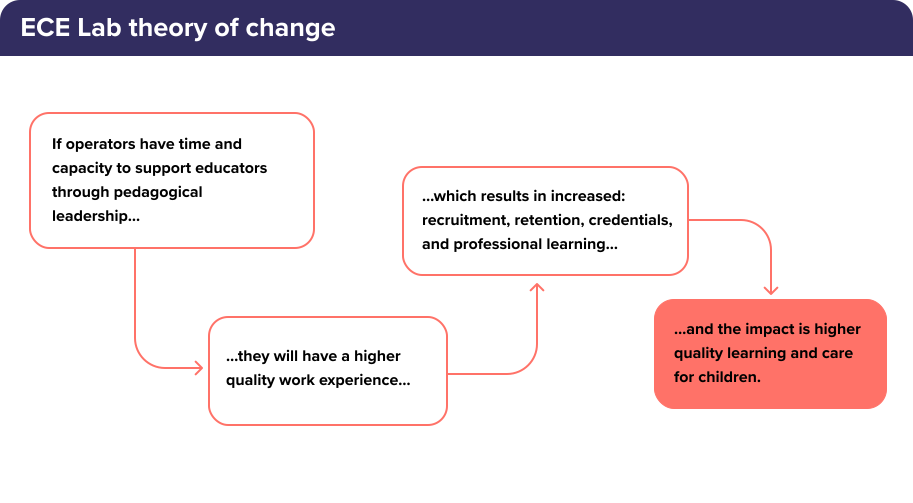
The ECE Lab set out to explore these questions and theories of change in two co-design sprints that aimed to achieve the following goals:

Generate clearer understanding of the core problems affecting the Early Childhood Education sector in Atlantic Canada.

Develop and test ideas for addressing key barriers to thriving for educators in early learning and childcare centres.

Design a clear pathway to developing prototypes through to the pilot stage (if field testing points to the prototype’s suitability for further development).

Create a roadmap to share what was learned and how it can be applied to future work in this space.

Amplify the voice and value of educators and early childhood education.

Build stronger relationships among stakeholders across Atlantic Canada.