English
ECEs as Innovators

“Let’s try it out!”
Social Innovation in Atlantic Canada’s ECE Sector
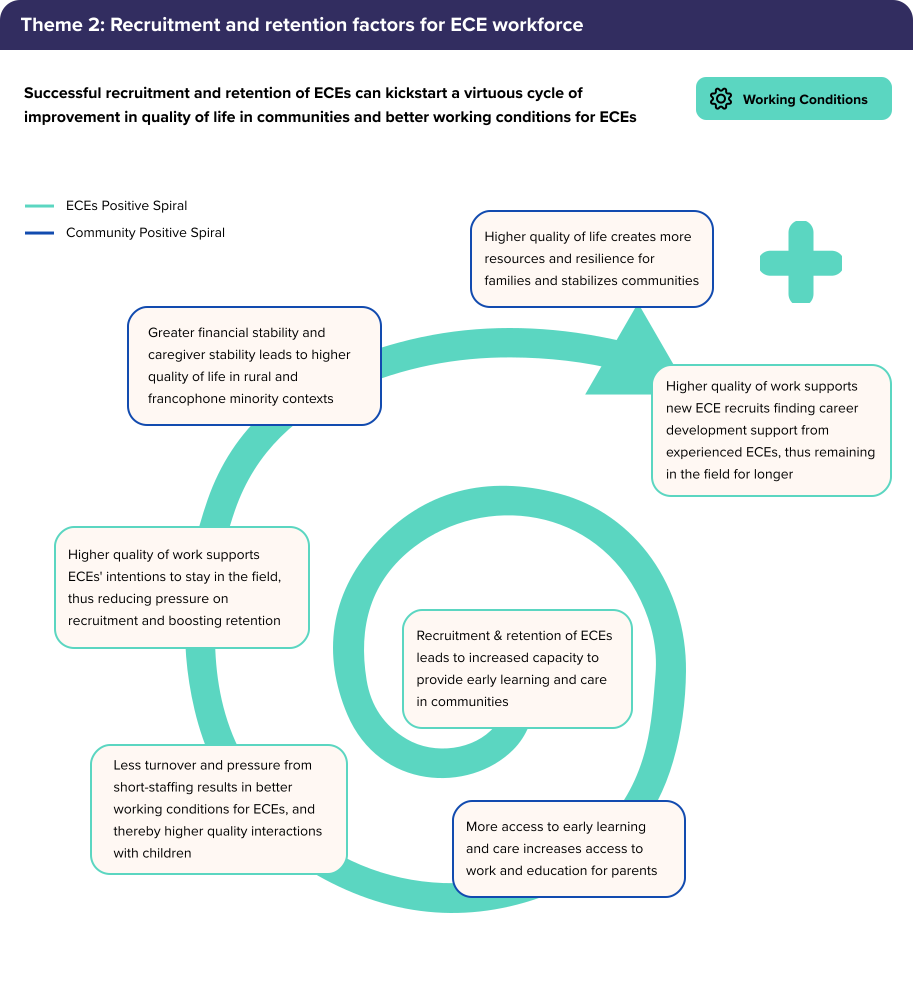
ECE professional practice is highly compatible with the iterative test-and-learn cycles of innovation design. Every day, ECEs work with children in responsive, adaptive ways — trying out new ways to support their care and learning, gathering feedback from the children, and making adjustments to their environment and interactions. Participants in the ECE Lab applied this iterative approach to the sector’s systemic challenges around recruitment and retention of the ECE workforce. They created eight social innovation prototypes that offer new ways of addressing these challenges. Supported by embedded design coaches, each prototype was field tested and refined, and now all prototypes are offered here for use by anyone in the ECE sector.
Explore the insights and prototypes created in the Lab on this page. Then download a prototype action pack and try it out in your community.

ECE Staff Satisfaction
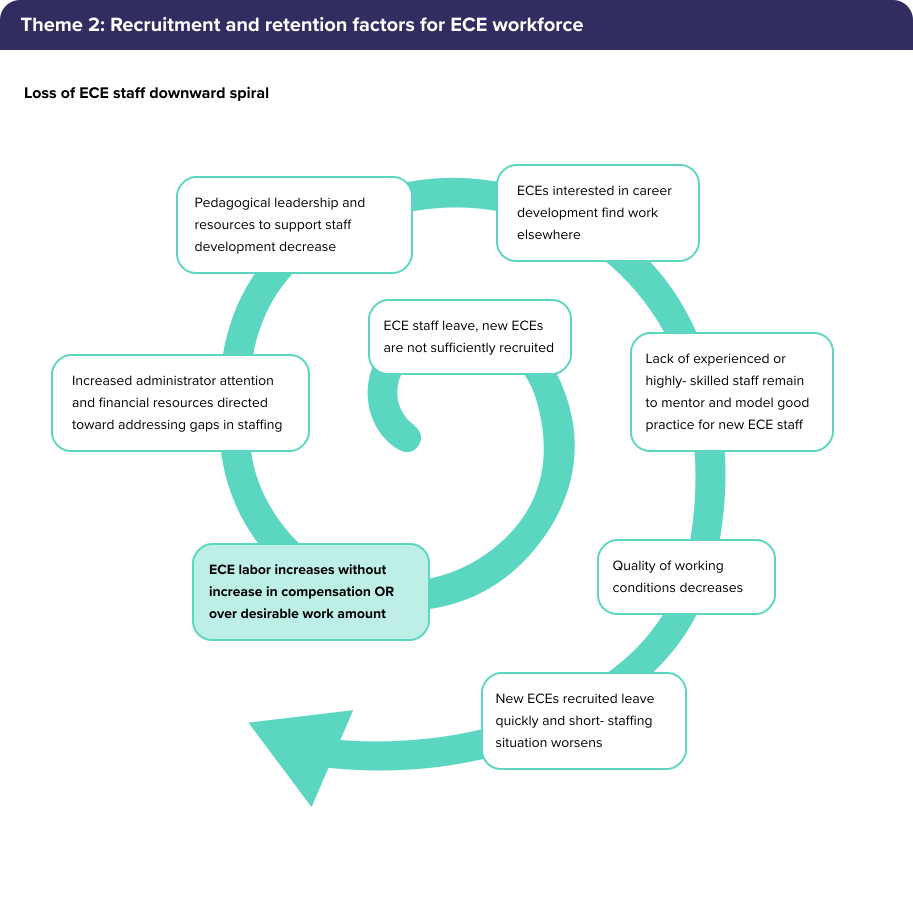
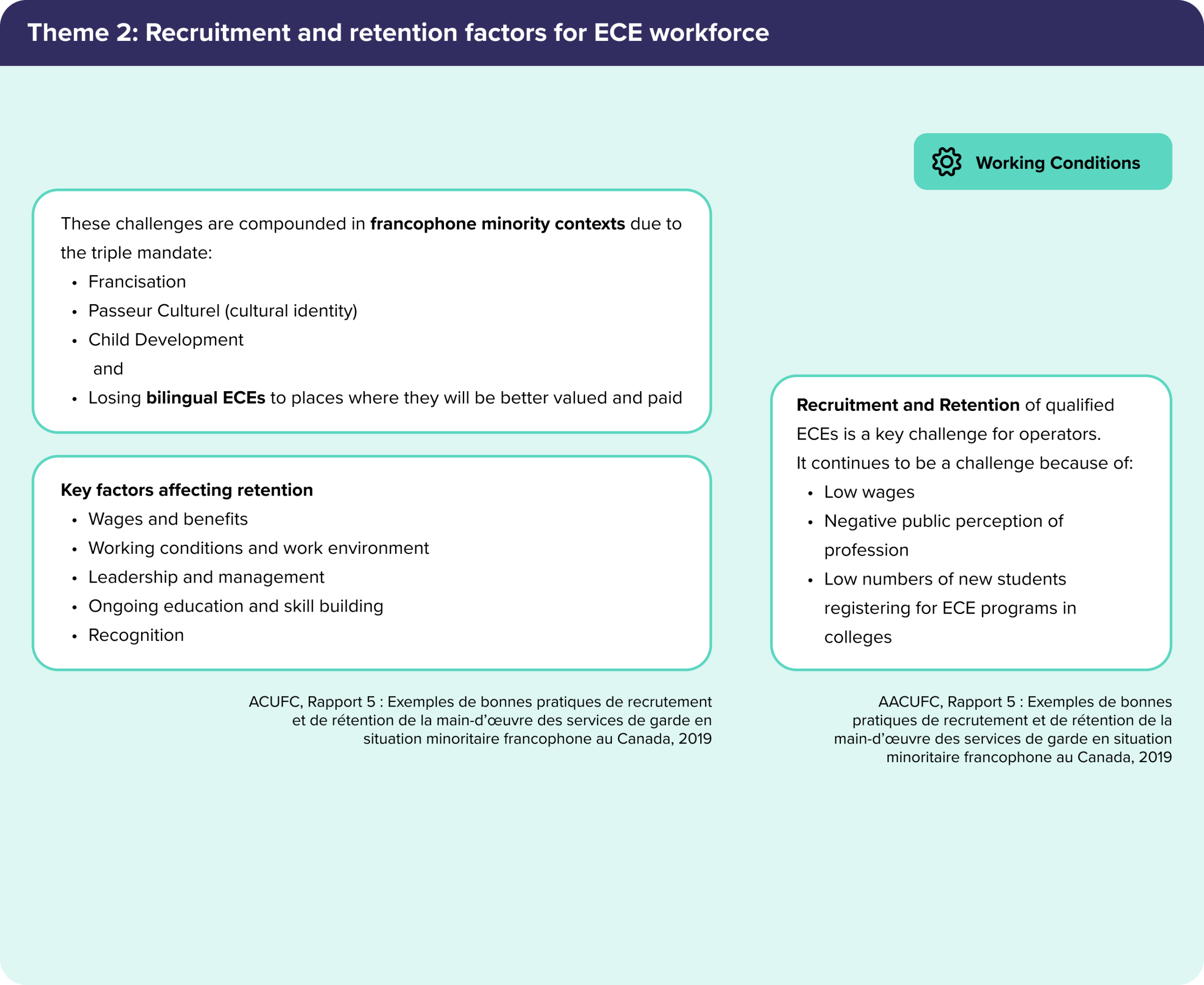
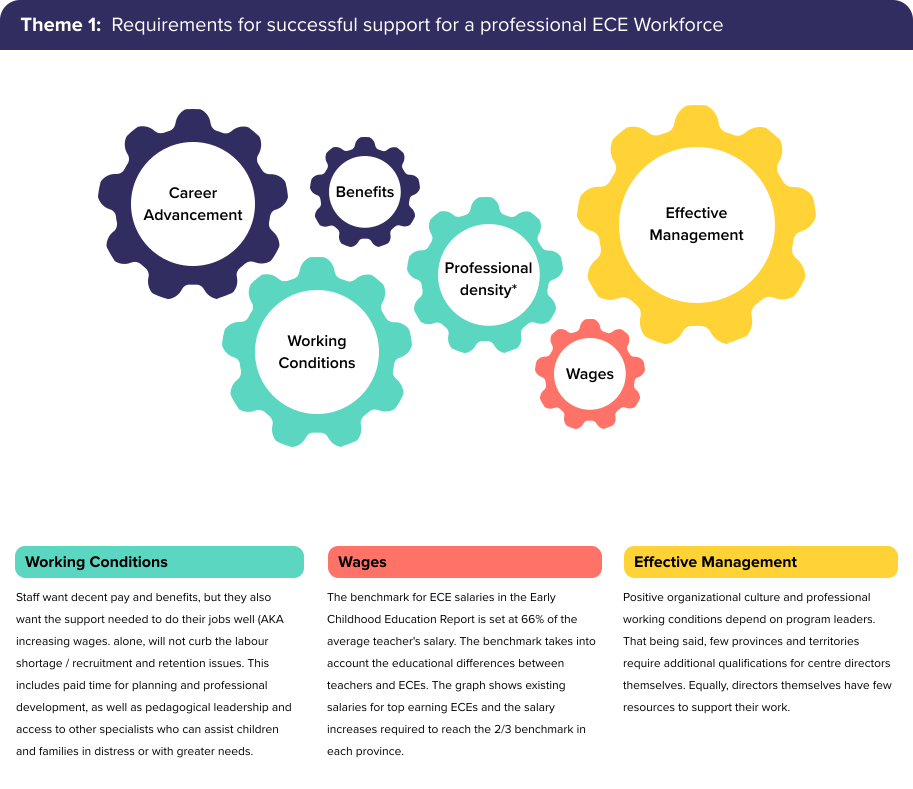
- ECEC staff show a high level of satisfaction with the profession, but their views on the working conditions in the sector are mixed.
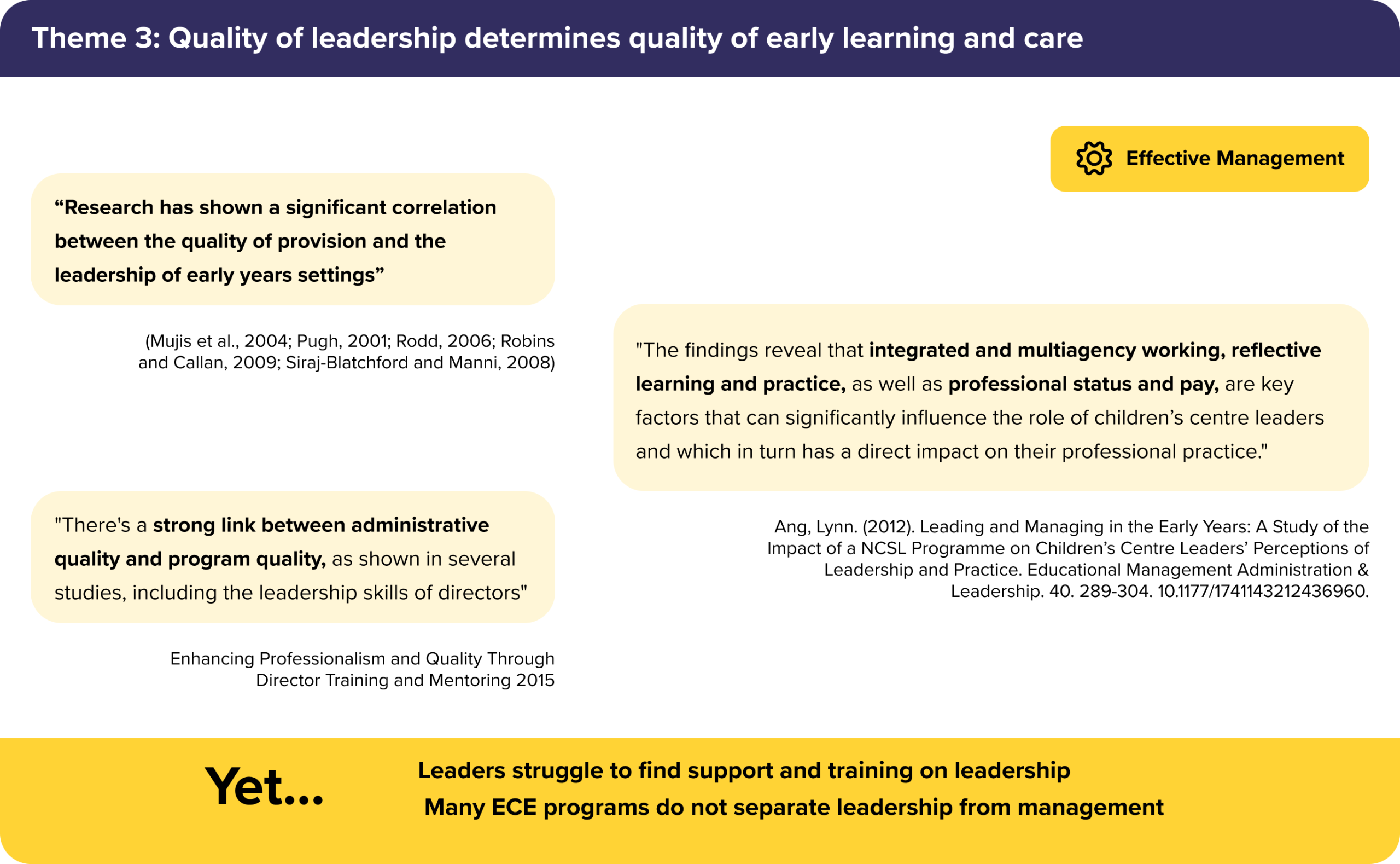
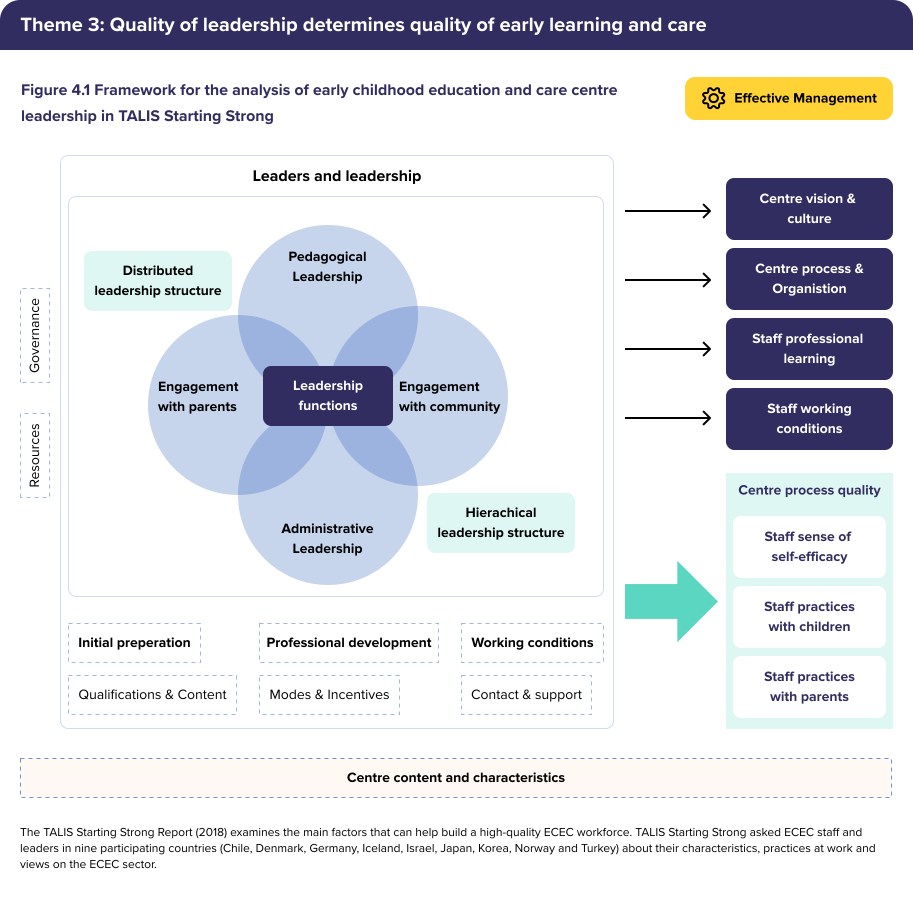
- Staff who perceive leadership as being more distributed in their ECEC centre tend to engage more frequently in professional collaborative practices and report greater satisfaction with their job.
- Feelings of stress emerge from imbalances between job demands, resources and rewards. Support from leaders and satisfaction with salary act as buffers of stress in most of the countries, although not consistently. Training related to the source of stress, collaborative practices and control over decisions are not sufficiently developed or effective to act as significant buffers.
- ECEC staff more engaged in collaborative practices are more likely to participate in training activities, underscoring the synergies between formal and informal channels for skills development.
- Staff indicate retirement, health- related reasons, family responsibilities and work outside of the ECEC sector as the most likely reasons to leave their job, which suggests that they often envisage limited career progression within the sector.