
Blog Post
Atlantic Canada Needs an Education Strategy to Win the Talent Competition
Why accountability, foundational skills, and system redesign are essential to our region’s future competitiveness
Winning the competition for talent is a foundational recommendation of the Atlantic Economic Panel. It’s an essential ingredient in paving the way for a prosperous region where people want to live, work, and visit. We cannot win that competition if our education systems are not helping students build the skills and competencies they need to succeed after school.
In the latest report from the New Brunswick Advocate’s office, Buying the Ticket, a central question is one of accountability: who is responsible for the outcomes our systems produce? That question belongs at the heart of this conversation. If students move through our system without the foundational skills they need, it’s a systems outcome, and systems outcomes require systems-level accountability.
Benchmarks such as PISA are useful because international rankings give us a way to test whether students are developing the foundational skills they need to succeed in an increasingly complex world where the competition for talent is real. Benchmarking is not something we should be afraid of. It should help us ask the harder question underneath the results: how are we preparing our students with the skills required for success?
A System under Pressure
Our education system is still imprinted by an earlier model of selection and sifting, a model built on early industrialization. Today, however, we rightly expect schools to serve every learner. We cannot accept dropping students from the system when they struggle. But we have not fundamentally redesigned the system for that expanded promise.
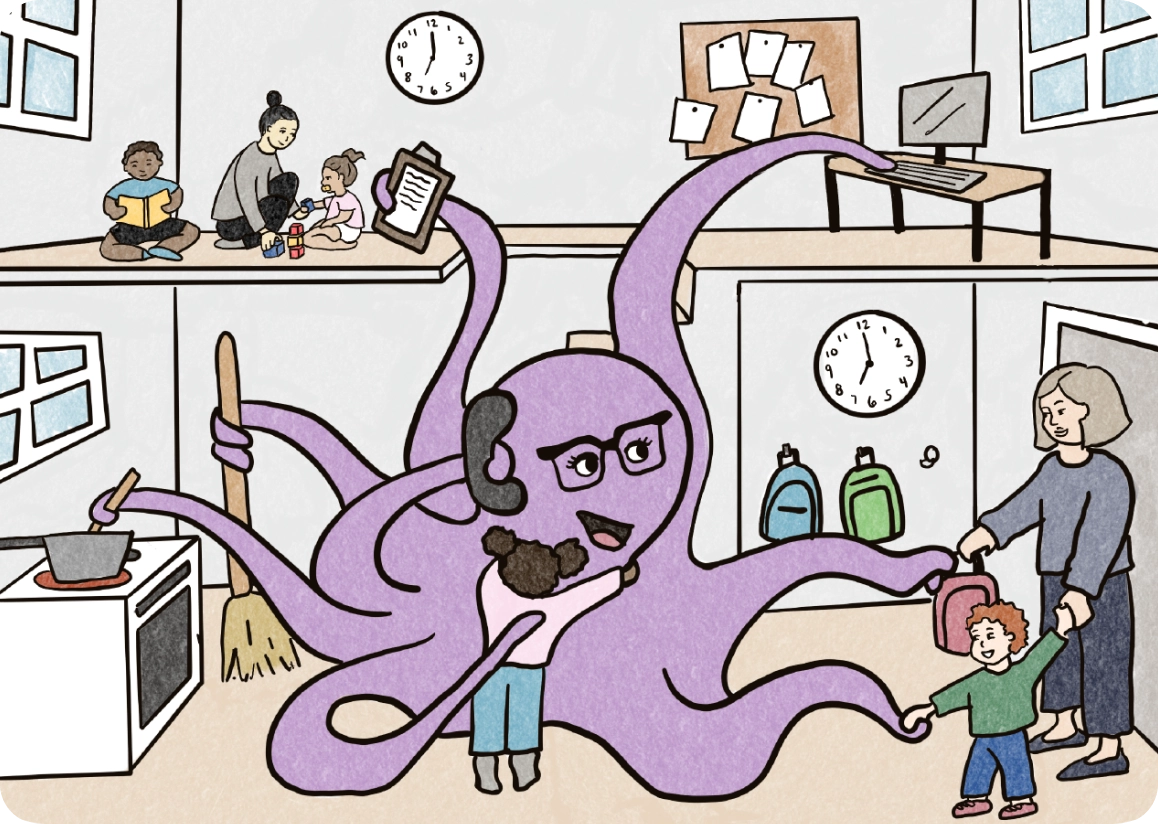
Instead, we continue to ask more and more of the education system. Schools are expected to advance literacy and numeracy, support mental health, foster inclusion, address inequities, develop social and emotional skills, prepare students for an uncertain labour market, navigate technology and artificial intelligence, teach healthy habits, and respond to a growing range of complex needs that increasingly enter the classroom.
All of these objectives matter, and many (or all) of them are essential. But when a system accumulates more responsibilities without fundamentally redesigning how it operates, difficult trade-offs emerge. Teachers are asked to meet increasingly diverse needs within the same amount of instructional time. Schools are expected to provide individualized support, yet often lack the resources, staffing, or flexibility required to do so at the scale needed.
I saw this challenge from the other side when, during the early stages of the pandemic, I was offered an opportunity to teach Grade 9 mathematics. As a certified teacher in secondary science and mathematics, I was qualified to take it on though I ended up declining because I could not reconcile the reality facing many students with the structure I would be working within. Too many students had significant gaps in foundational skills.
In practice, we’re asking one teacher to introduce new material while also trying to catch students up from wildly different starting points, all in the same classroom and often within the same hour. With limited preparation time across an entire day, there is little room to diagnose gaps, tailor support, teach the curriculum, and help every student build the foundations they may have missed unless teachers absorb that work through significant personal time.
That experience reflects the broader pressure facing the system. It can feel like a pressure cooker without an exit: more responsibilities, more diverse needs, the same finite instructional time, and too few viable alternatives.
Progression becomes the mechanism that keeps the system moving. Students move forward because the calendar (or bell) says it is time, not because they are ready. This doesn’t happen because educators don’t value learning or because anyone believes skills are unimportant. It happens because there are few viable alternatives within the system as it currently exists.
Foundations Before Credentials
What if part of the problem is that we have increasingly optimized our education system for social progression at the expense of mastery?
Perhaps the more important question is: what would it take to build a system that supports social development while also ensuring students acquire the foundational skills required to thrive, contribute, and compete in an increasingly complex and global world?
From a systems perspective, one place to begin is by asking whether our policies create enough flexibility for readiness to matter.
Recently, I tried to help a friend who wanted her four-year-old daughter to start school early. By every measure that mattered, her daughter was ready. She was articulate, already bilingual in 2 languages (one of which is an Official Language), knew her alphabet, numbers, and colours, and was curious, engaged, and eager to learn. Readiness, however, wasn’t the question. The question was age. The policy said five years old, so the answer was no.
That experience reflects the broader tension. Can students accelerate when they are ready, and is the system capable of providing meaningful intervention when they are not? Can we design pathways that recognize that human development does not happen in one-year increments?
Those questions deserve a conversation of their own. Readiness may also be one practical place to begin restructuring: flexible entry, early identification of gaps, targeted support, and progression based more meaningfully on what students are prepared to do next.
I also happen to be a certified executive coach. One of the core principles of coaching is to hold people fully capable. That means believing people can grow, learn, and meet (and exceed) high expectations when given the right support. It also means being honest about where they are today.
You cannot coach someone effectively by pretending they have mastered skills they have not yet developed. You can’t compete at the highest levels without foundational skills. In sports, moving an athlete up before they have the strength, technique, and confidence to compete does not set a high standard; it sets them up to struggle. Athletes are provided support, feedback, practice, and encouragement until they are ready for the next challenge.
Redesigning for Mastery and Inclusion
Holding students capable does not mean moving them along regardless of preparedness. It means believing they can achieve high standards and then creating the conditions necessary for them to reach those standards.
The answer cannot be to retain large numbers of students indefinitely. Nor can it be to create rigid streaming systems that limit opportunity based on readiness at one stage of life as we had previously done. We know those approaches carry significant risks and inequities. But neither can the answer be a system where age becomes the primary organizing principle, and readiness becomes secondary.
We need to be much clearer about the theory of change behind the system we are building.
- What foundational skills and capabilities should every student master?
- How will we identify gaps early and respond before they compound?
- What flexible pathways can support intervention, acceleration, and re-entry without limiting future opportunity?
- How can instructional time, staffing, and specialist support be organized around learner needs?
- Who is accountable for system outcomes, and how will progress be measured transparently?
The goal is to help young people develop the knowledge, skills, confidence, resilience, and capabilities they need to thrive in the world. That requires us to define the foundations, identify gaps early, provide meaningful intervention, create room for acceleration, and hold the system accountable for whether students are ready for their next stage.
I don’t want this to be a criticism of teachers, school leaders, educational assistants, support staff, or policymakers. In my experience, these are ALL people who care deeply about young people and who have dedicated their careers to helping them succeed. The challenge is not a lack of commitment. The challenge is that we continue to ask more and more of the education system without fundamentally redesigning how it operates. And fundamental redesign is very hard. Changing a system requires us to hold back from finger pointing, and realize that we all have a role to play.
An Atlantic Canadian Imperative & Next Steps
Atlantic Canada needs an education strategy that connects education, talent, and workforce systems. Winning the competition for talent that is a foundational piece of the Atlantic Economic Panel strategy will not be possible without strong education systems.
The education strategy needs to establish a shared ambition for foundational skills, strengthen accountability for outcomes, and create enough flexibility for readiness to matter. It should help us build pathways that respond to learners rather than forcing every learner through the same timeline. One simple idea to move transformation forward could be to use charter schools to test and learn from new ways of teaching and learning.
This is not only an education agenda; it is an economic and social strategy for the region, and a necessary part of preparing Atlantic Canadians for what comes next. Our responsibility is to build an education system that prepares every learner for what comes next—and equips Atlantic Canada to compete for the talent on which its future depends.
Vanessa Paesani, B.Sc (Honours), B.Ed, MA, PCC | Executive Director | UNB’s Pond-Deshpande Centre
UNB’s Pond-Deshpande Centre is a proud partner of the W4S Lab, led by our UNB colleagues, Dr. Lucia Tramonte and Dr. Herb Emery. Join us at GovMaker 2027 as we go deeper into what it will take to build education, talent, and workforce systems that prepare Atlantic Canadians for what comes next. We’ll be announcing more details after our GovMaker 2026, focused this year on affordability.
Follow Along
If you’re interested in following this and our other work accelerating systems change for place-based prosperity, you can subscribe to receive updates in our newsletter.
