
Skills to Pathways
How Adult Competencies Shape NEET Outcomes in Atlantic Canada
Are declining skills shaping the future of Atlantic Canada?
Atlantic Canada is facing a growing skills challenge.
Over the past two decades, literacy and numeracy outcomes among young people have declined significantly. In New Brunswick, nearly one-third of students perform below minimum OECD proficiency thresholds, raising important questions about the long-term implications for individuals, communities, and the economy.
But what happens when those students become adults?
Do these challenges persist over time? How do skills influence employment, education, and workforce participation? And what can governments, educators, employers, and community organizations do to respond?
Skills to Pathways seeks to answer these questions by examining the relationship between adult competencies and labour market participation across Atlantic Canada. Using newly available data from the Programme for the International Assessment of Adult Competencies (PIAAC), this project will provide new insights into how literacy, numeracy, and problem-solving skills shape economic opportunity and inclusion.
Why this Matters
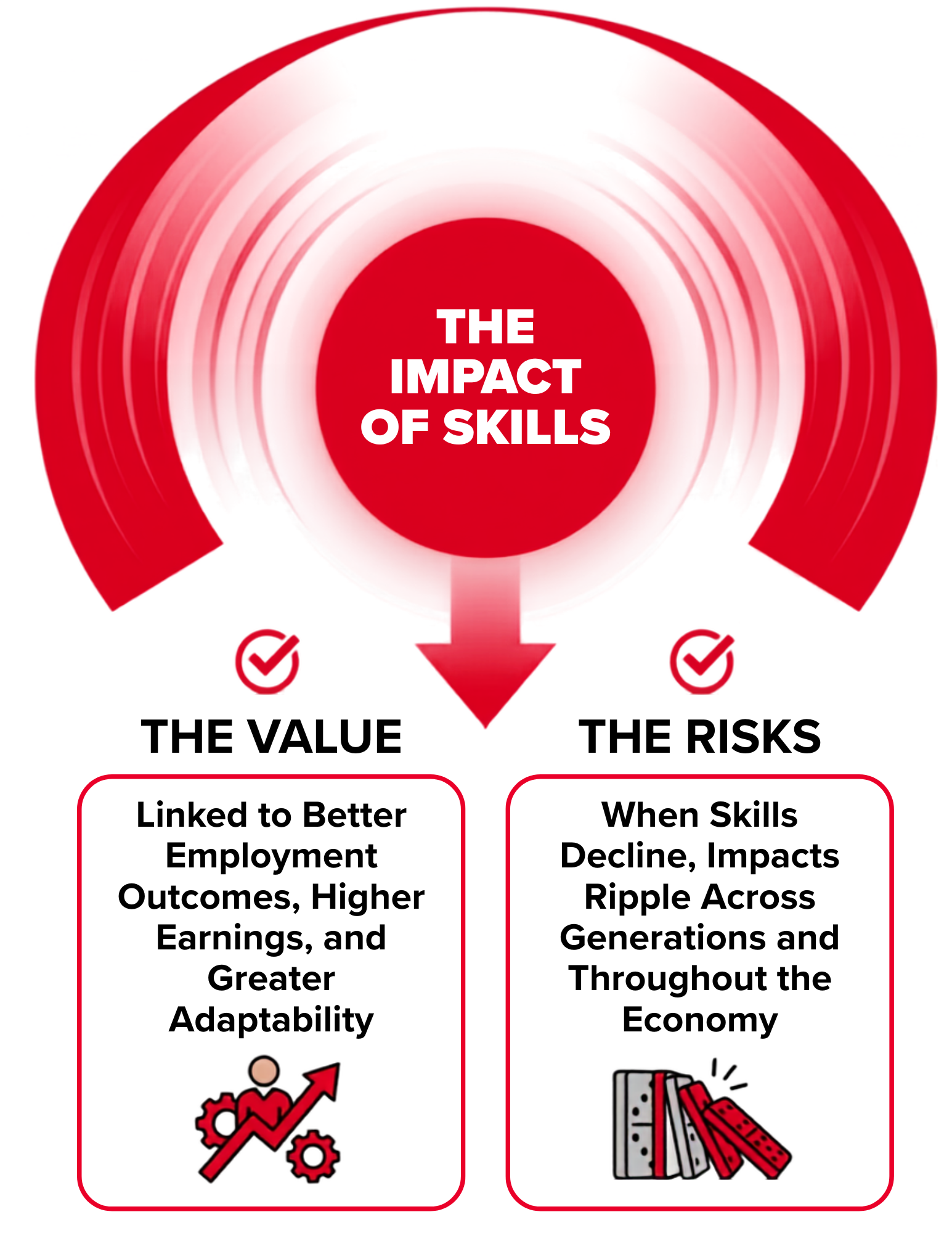
Strong foundational skills are linked to better employment outcomes, higher earnings, greater adaptability, and stronger participation in civic and community life. When skills decline, the impacts can ripple across generations and throughout the economy.
For policymakers and practitioners, understanding the connection between skills and labour market outcomes is critical for designing effective interventions. Yet many questions remain unanswered:
Do lower literacy and numeracy levels observed in adolescence persist into adulthood?
Which groups are most affected by skill deficits?
Are low skills contributing to labour market disengagement?
When are education and training the right solution and when are other supports needed?
This project will help answer these questions and generate actionable evidence to support more effective and equitable policy responses.
What Is PIAAC?
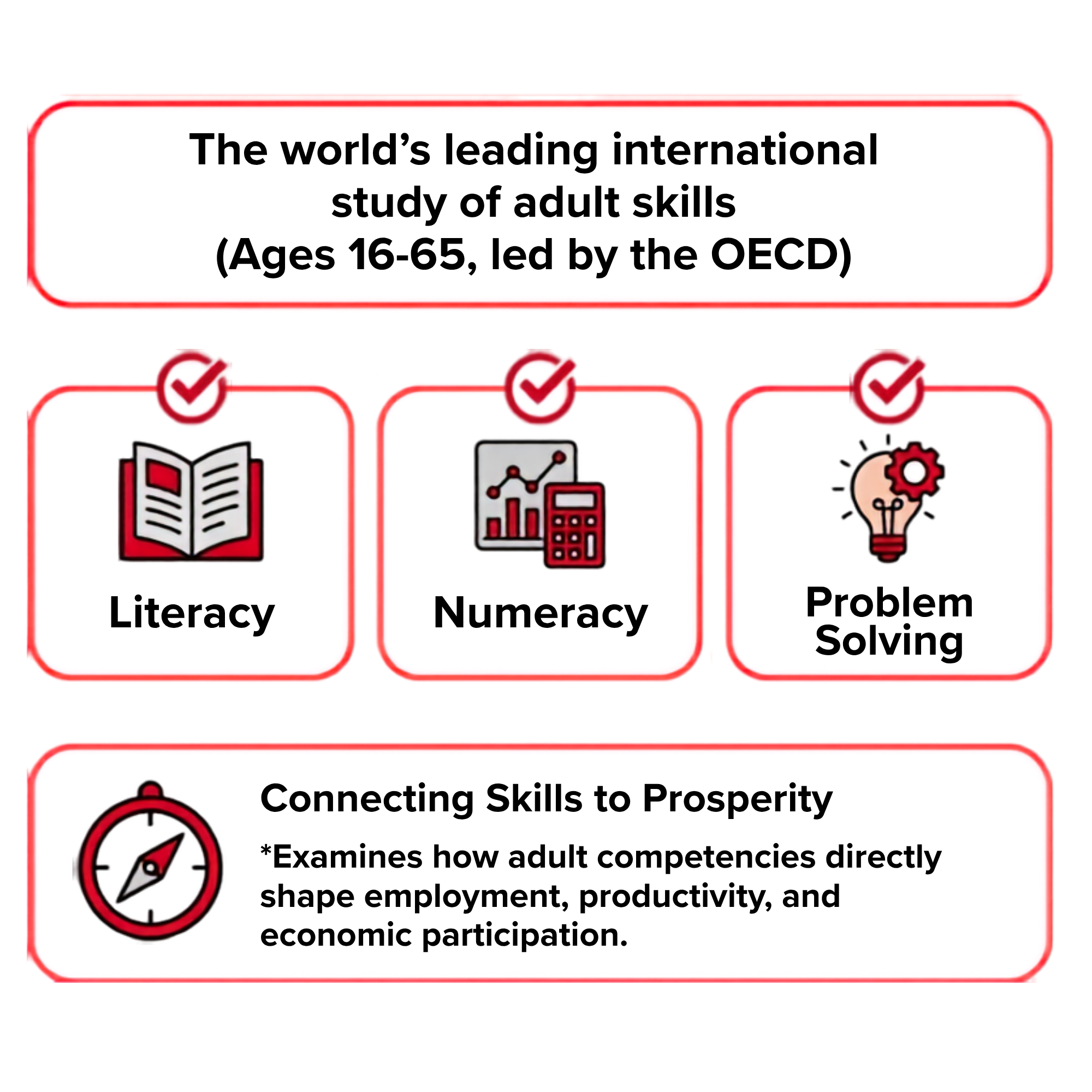
The Programme for the International Assessment of Adult Competencies (PIAAC) is the world’s leading international study of adult skills.
Led by the OECD, PIAAC assesses adults aged 16 to 65 in three key areas:
- Literacy
- Numeracy
- Problem-solving
The study also examines how these skills are connected to education, employment, workplace experiences, income, and everyday life.
By providing a comprehensive picture of adult competencies, PIAAC helps countries understand how skills contribute to economic participation, productivity, and prosperity.
What We Are Studying
As one of ten projects funded through the Future Skills Centre’s PIAAC research initiative, this project explores how adult skills influence labour market outcomes, particularly among young adults who are not employed, enrolled in education, or participating in training.
Drawing on PIAAC and PISA data, the research will examine:
- Whether declining literacy and numeracy outcomes among youth translate into lower adult skill levels.
- How adult skills vary across different populations and communities.
- How skills relate to employment and labour force participation.
- How the prevalence of different forms of labour market disengagement has changed over time.
- Which barriers are primarily skills-related and which are linked to broader structural factors.
The findings will help identify where investments in education and training can have the greatest impact and where other interventions may be more appropriate.
Understanding NEET
A key part of this project focuses on NEETs: young adults who are Not in Employment, Education, or Training.
NEET is not a single group. Young people become disconnected from work and education for many different reasons, including:
- Difficulty finding employment
- Caregiving responsibilities
- Disability or health-related barriers
- Discouragement after extended job searches
- Other social and economic challenges
By examining skills across different NEET categories, the project will help determine when skills training is the appropriate response and when broader supports, such as childcare, accessibility measures, employment services, or social infrastructure, may be needed.
What We Hope to Learn
This project is designed to move beyond broad averages and uncover a more detailed understanding of how skills, opportunity, and labour market participation interact.
The research will provide insight into:
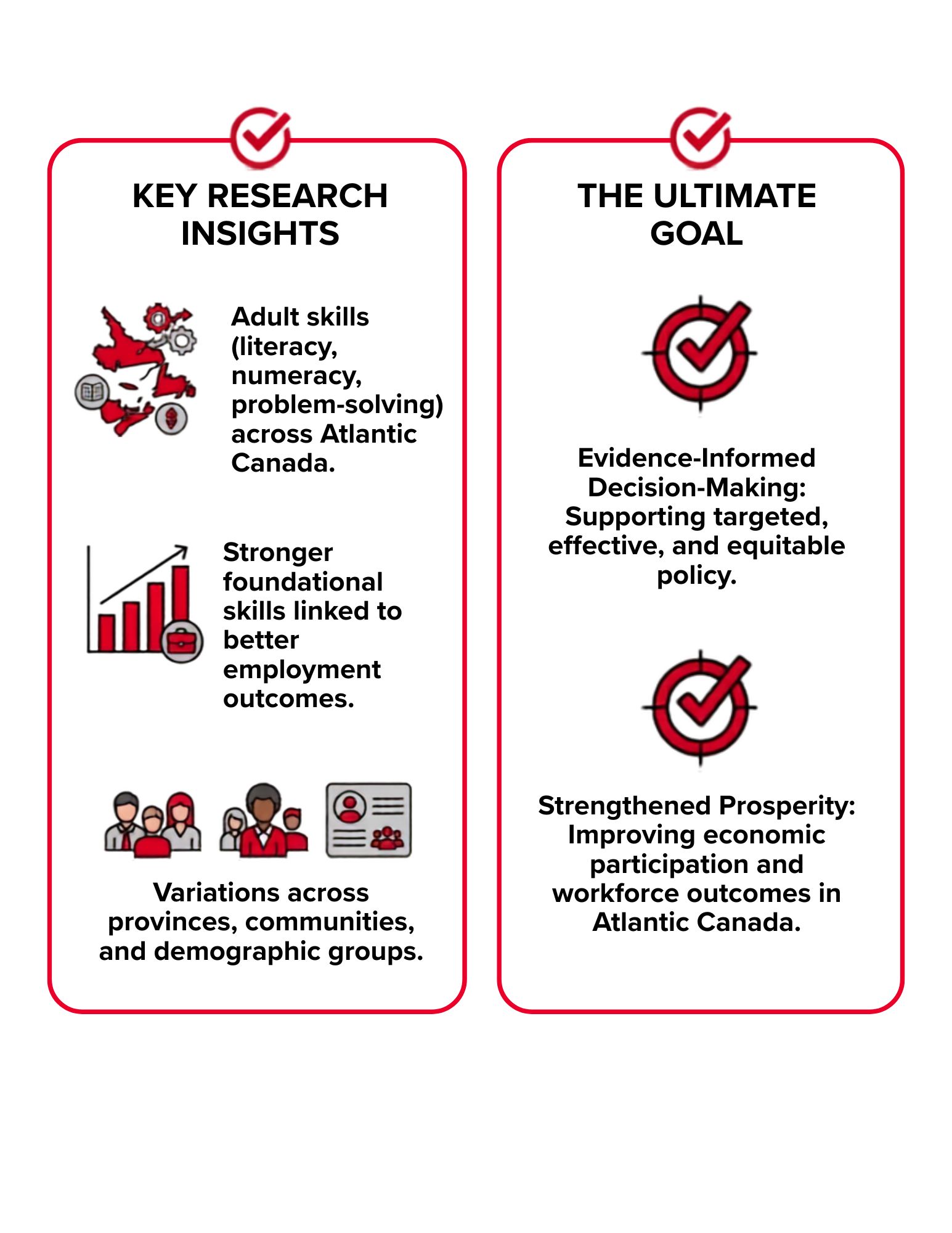
- Adult literacy, numeracy, and problem-solving outcomes across Atlantic Canada.
- The relationship between foundational skills and employment outcomes.
- Differences across provinces, communities, and demographic groups.
- The changing nature of labour market disengagement.
- Policy approaches that are more targeted, effective, and equitable.
Ultimately, the project aims to support evidence-informed decision-making that strengthens economic participation, improves workforce outcomes, and contributes to shared prosperity across Atlantic Canada.
Project Team
This project is led by the University of New Brunswick (UNB) through a collaboration between the Pond-Deshpande Centre (PDC) and leading UNB researchers specializing in education systems, skills assessment, labour economics, and public policy. Together, the team brings internationally recognized expertise in the analysis of large-scale assessment data and a strong track record of translating research into actionable insights for policymakers and communities.
The project combines rigorous academic research with knowledge mobilization expertise to ensure findings inform policy, workforce development, and economic participation across Atlantic Canada.
Research Team
- Dr. Lucia Tramonte: Internationally recognized expert in education systems, skills measurement, and international large-scale assessments.
- Dr. Herb Emery: Vaughan Chair of Regional Economics, with expertise in labour markets, productivity, human capital, and public policy.
- Dr. Simon Marmura Brown: Knowledge Mobilization Lead, responsible for translating research findings into accessible, policy-relevant insights and engaging stakeholders across the region.
- Pond-Deshpande Centre Team: Supporting project coordination, stakeholder engagement, communications, and knowledge mobilization to ensure research findings reach decision-makers, practitioners, and communities.
Through the University of New Brunswick, this project brings together expertise from sociology, economics, public policy, and social innovation to better understand how adult skills shape workforce participation, opportunity, and prosperity in Atlantic Canada.
Knowledge Mobilization
Research only matters when it is used. Project findings will be shared through:
- Public research reports
- Policy briefs
- Interactive data visualizations
- Presentations and webinars
- Policy showcases and engagement events
By making the findings accessible to policymakers, educators, workforce development organizations, employers, and community leaders, the project aims to support practical action that improves skills outcomes and workforce participation across Atlantic Canada.

Funder
The Future Skills Centre is Canada’s forward-thinking centre for research and innovation dedicated to helping Canadians gain the skills they need to thrive in a changing labour market. This project is part of FSC’s national PIAAC research initiative exploring the development and impact of skills across Canada.

Follow the Research
Sign up to receive project updates, new findings, data visualizations, reports, and policy insights as they are released. Through our newsletter, you’ll get early access to research highlights, emerging trends, and practical insights on how skills shape workforce participation, opportunity, and prosperity across Atlantic Canada.
Whether you’re a policymaker, educator, employer, researcher, or community leader, our updates will help you stay informed about the evidence shaping the future of skills development and labour market participation in the region.
Subscribe to receive the latest PIAAC project updates directly to your inbox.
